
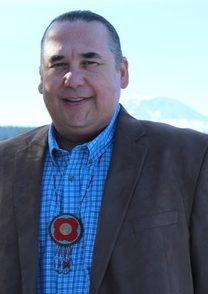
KEYNOTE | PHIL RIGDON
Phil Rigdon is the Vice-President of the Intertribal Timber Council and represents Yakama Nation on the executive board. Phil has been the Superintendent of Yakama Nation’s Natural Resources Department since May 2005 and has worked for the Tribe since June 1996.
He represents the Yakama Nation on the Tapash Sustainable Forest Collaborative, the Yakima River Basin Watershed Enhancement Project Workgroup & Conservation Advisory Group, the Washington State’s Columbia River Policy Advisory Group, and the Hanford Natural Resource Trustee Council. Phil obtained a BS in Forest Management from the University of Washington and a Masters of Forestry from Yale School of Forestry and Environmental Studies.
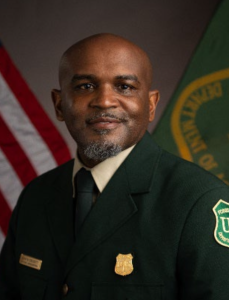
REMARKS | JOHN CROCKETT
John Crockett serves as the Deputy Chief of State, Private and Tribal Forestry and the Deputy Chief for the National Forest System for the USDA Forest Service. In these senior leadership roles, he provides strategic direction, supports national policy development, and ensures coordination across key programs and partnerships that advance the agency’s mission. John is known for his steady leadership, sound judgment, and his ability to guide complex initiatives at the national level.
Throughout his tenure with the Forest Service, John has held leadership positions across multiple deputy areas and at every level of the organization. He played an instrumental role in implementing permanent firefighter pay reform and incident response premium pay, contributing to strengthened support for wildland firefighters and incident responders across the country.
A native of rural Alabama, John earned a degree in Forest Management from Alabama A&M University in 1998. His longstanding connection to natural resources continues to shape both his professional commitment and personal interests. Outside of work, he enjoys spending time with his wife and their three children, particularly through travel and outdoor activities.
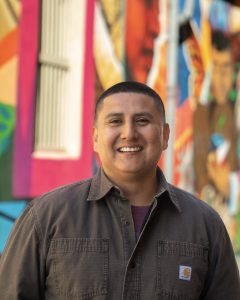
PLENARY I | JAMES CALABAZA
James Calabaza (Santo Domingo Pueblo) is Director of the Indigenous Lands Program at Trees, Water & People. He engages and works with Tribal Nations on efforts centered around Tribal-led stewardship projects that cultivate partnership opportunities leading to landscape-scale restoration efforts. James provides insight on best practices to work with Tribal governments that uphold traditional ethics of governance, leadership values and Traditional Ecological Knowledge.
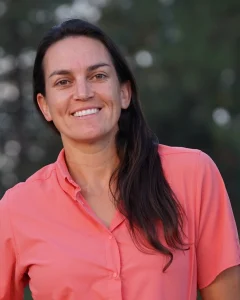
PLENARY I | DR. SERRA J. HOAGLAND
Dr. Serra Hoagland (Laguna Pueblo) works for the Forest Service Research & Development branch as the National Program Lead for Tribal Research. Dr. Hoagland is the 3rd native female in the US to receive a PhD in forestry and was the first and only native co-author on the 4th National Assessment of Tribal Forests and Forest Management in the United States. She is active in the Society of American Foresters, the Intertribal Timber Council, the Native American Fish & Wildlife Society as well as The Wildlife Society.
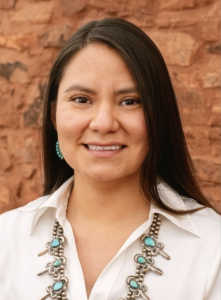
PLENARY I | JAIME YAZZIE-DINÉ
Jaime Yazzie is the Senior Research Coordinator at the Southwestern Mountains Climate Research Center at Northern Arizona University. Her work focuses on forest ecology and dendrochronology, grounded in Diné knowledge and Indigenous research approaches. Jaime supports place‑based, community resilience through partnerships, education, and student mentorship.

PLENARY I | AYUTHEA LAPIER
Ayuthea is an enrolled member of the Confederated Tribes of Coos, Lower Umpqua, and Siuslaw Indians – and a Hanis Coos descendant of Jane Jordan. Ayuthea’s paternal lineage includes the Amskapi Pikuni (Blackfeet), Tlingit (Chookeneidi clan), and Métis. Ayuthea is the Communications and Media Manager for FireGeneration Collaborative, working with young and diverse fire practitioners to advance Indigenous leadership and solutions for living with fire.
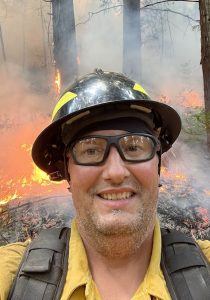
PLENARY I | DR. FRANK LAKE
Frank Kanawha Lake is of mixed North American Indigenous and European ancestry. He grew up learning the cultural practices and teachings of his Karuk and Yurok family in northwestern California. He was taught and trained by elders, cultural practitioners, family and friends over his lifetime. He has gained knowledge of the cultural subsistence, ceremonial-ritual, artistic, and other traditional practices and belief systems of the Northwestern California tribal area. These cultural teachings along with Frank’s western academic and professional experience, as a federal researcher, inform his Indigenous Fire Stewardship and knowledge of fire ecology of forest, shrub, grassland, riparian and marine environments in the Klamath-Siskiyou and Pacific Northwest regions.
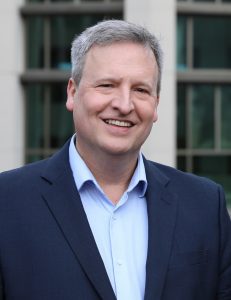
REMARKS | DAVE UPTHEGROVE
Commissioner of Public Lands Dave Upthegrove has dedicated his career to public service and to our lands. As Commissioner, he leads the Washington State Department of Natural Resources with a focus on protecting clean air, clean water, and critical habitat, strengthening wildfire prevention and response, expanding recreational opportunities, and honoring the sovereignty of Washington’s tribes. He oversees a team of approximately 2,200 employees responsible for managing 5.6 million acres of our state’s lands, waters, and forests.
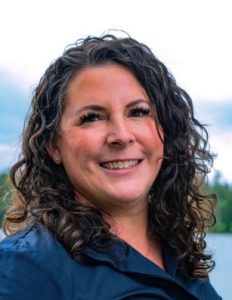
REMARKS | ANNE-MARIE MARSHALL-DODY
Anne-Marie Marshall-Dody is a nationally respected leader in disaster resilience and public sector management with more than three decades of public service. She currently serves as Assistant Director for Disaster Resilience at Washington State Emergency Management, where she leads strategic initiatives that strengthen statewide preparedness, hazard mitigation, and long-term community resilience. Throughout her career, she has held key leadership roles including Deputy Public Works Director for the City of Redmond and Floodplain and Watershed Services Manager at Pierce County Planning and Public Works, where she managed complex programs focused on floodplain management, salmon recovery, watershed protection, and environmental stewardship.
Anne-Marie has overseen major hazard mitigation planning efforts, secured significant grant funding, and led the development of innovative programs designed to protect communities and critical infrastructure across Washington State. Known for her collaborative leadership style and ability to manage multi-million-dollar budgets, she brings deep expertise in strategic planning, stakeholder engagement, and public sector leadership. She remains dedicated to advancing policies and initiatives that strengthen community resilience and help safeguard people, infrastructure, and natural resources from both natural and human-caused disasters.
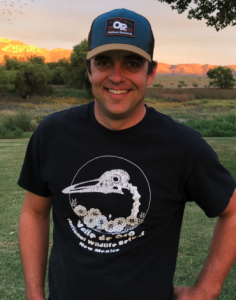
PLENARY II | COLLIN HAFFEY
Collin Haffey started in February 2023 as the new post-fire recovery program manager for the WA Department of Natural Resources. Prior to joining the DNR he worked for over ten years on fire ecology, and post-fire recovery in the Southwestern US. He leads Washington State’s post-fire recovery program, supporting local governments, tribes, NGOs and landowners in navigating recovery and scaling resources statewide. Previously, he served as Deputy State Coordinating Officer in New Mexico, developing recovery strategies and securing support for underserved communities. Collin’s work spans the full fire cycle, and he currently helps lead a statewide effort to strengthen funding for forest health, fire response, and community resilience.
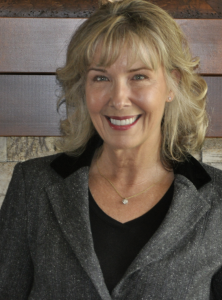
PLENARY II | ARA ANDREA
For the last five and a half years, Ara has had the privilege of being the statewide coordinator of the Shared Stewardship Initiative for the State of Idaho. Most recently, for her efforts in orchestrating and implementing thousands of acres of cross-boundary fuel-reduction projects across the state, she was awarded the 2025 Joe Mafnas Current Achievement Award for Partnerships by the National Association of State Foresters, and she has also received this year’s Celebrating Natural Resources Award by the University of Idaho College of Natural Resources.
For 4 years prior, she was the Forestry Assistance Bureau Chief for the Idaho Department of Lands (IDL), and before that, she served over 3 years as IDL’s Technical Services Bureau Chief. Moving to work with the State of Idaho in 2007, she spent her first 6 years with IDL as the Forest Practices (Regulatory) Program Manager. In her pre-IDL professional life, Ara served 11 years as an instructor and program chair of a forest-management program at a college in Salem, Oregon—and she started her forestry career in graduate school, working with a Forest Service Research Station Lab on the campus of Southern Illinois University.
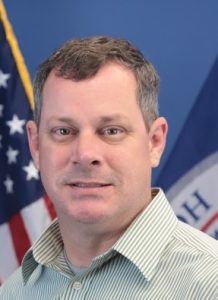
PLENARY II | MATT EMBRY
Matt Embry is a disaster recovery professional currently serving as the Recovery Manager for the New Mexico Department of Homeland Security and Emergency Management (DHSEM). Prior to joining DHSEM he served as a Federal Disaster Recovery Officer with the Federal Emergency Management Agency, supporting multiple federally declared disasters in New Mexico. Matt previously served in various roles with multiple state agencies managing disaster as well as other federally funded programs, under FEMA, HUD, DOE, and HHS grants. He holds a BA in Art History from St. Edward’s University and is a Certified Fraud Examiner.
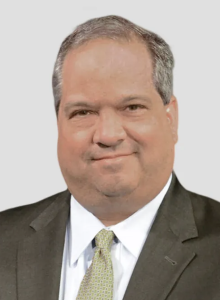
PLENARY II | ERIC LETVIN
Eric Letvin is the former Deputy Assistant Administrator of FEMA’s Mitigation Directorate will provide a federal perspective on integrating hazard mitigation into post-fire recovery and long-term resilience planning. Drawing on national experience, Mr. Letvin will discuss how mitigation authorities, funding mechanisms, and policy levers can support state-led recovery efforts and reduce community exposure to cascading impacts of wildfire.
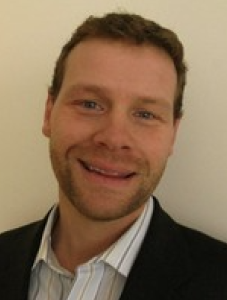
PLENARY II | TIM COOK
Tim Cook is the hazard mitigation officer for the state of Washington and has worked at the state emergency management division for the past eight years. He and his team administer Federal Emergency Management Agency-funded hazard mitigation assistance grant programs for Washington and implement the state’s enhanced hazard mitigation plan. Cook works closely with local, state, tribal, and federal partners to lead statewide efforts aimed at increasing community resilience, especially regarding wildfires, floods, earthquakes, and tsunamis. Cook is also an operations section chief in the State Emergency Operations Center and acts as deputy state coordinating officer during presidential declarations.

PLENARY III | MELISSA NAPOLI
Melissa Napoli is the Wildfire Coordinator for Wasco County, Oregon, where she leads countywide wildfire mitigation initiatives through strategic collaborative planning, project implementation, and comprehensive financial and grant management. She oversees the county’s $5.9 million Community Wildfire Defense Grant, awarded in Round 2, and authored an exceptionally competitive Round 3 proposal that scored 91.33—ranking 8th among Oregon’s 51 submissions.
Melissa is recognized for her ability to coordinate across agencies, disciplines, and jurisdictions. Her leadership has strengthened partnerships among local fire districts, county departments, state agencies, federal land managers, and community organizations—resulting in strengthened alignment around wildfire resilience. Tools and systems she developed have been adopted by major mitigation programs across Oregon. She is currently supporting Wasco County communities in developing long-term resiliency in both pre- and post-fire scenarios.
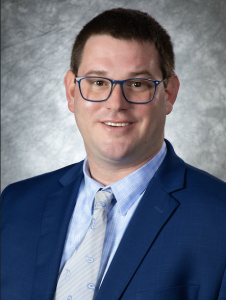
PLENARY III | GREGORY NELSON
Gregory Nelson is the director of the National Center for Public Lands Counties, where he leads the center’s operations and oversees activities focused on advancing the policy and practice related to America’s public lands counties. His work enhances the long-term research, capacity building and knowledge exchange between elected and appointed leaders from public lands counties, federal and state policymakers, key influencers and the public.
Gregory holds a doctorate in Science and Technology and Society from Virginia Tech. He has a rich background in county government, having spent seven years in Coconino County, Ariz., where he gained experience across multiple departments, working on federal land management issues, forest restoration, economic development initiatives in coal-impacted communities, land-use planning and policy around sensitive military facilities and disaster response and recovery. His knowledge of county government, particularly in navigating the complex relationship between local communities and public lands managers, informs his leadership at the National Center for Public Lands Counties to advance practical and impactful research for counties across the United States.
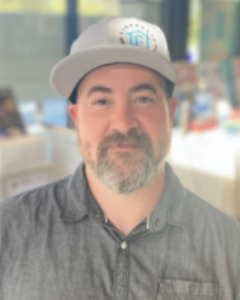
PLENARY III | TUCKER TEUTSCH III
Tucker Teutsch is the founder and Executive Director of Firebrand Resiliency Collective (FRC), where he leads a fantastic team working to advance community-driven solutions for wildfire resilience across Southern Oregon. Before founding FRC in the aftermath of the 2020 Almeda Fire, he directed builds and logistics for major music and art festivals across five countries and contributed to disaster relief efforts in New Orleans following Hurricane Katrina. His professional background also includes a decade as a journalist covering politics, culture, and travel in the U.S. and Caribbean.
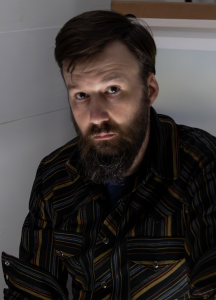
REMARKS | TRISTAN DUKE
Tristan Duke is a Los Angeles-based conceptual artist and interdisciplinary researcher whose work explores visual perception, deep time, and environmental action. Known for developing “artist-technologies,” Duke builds his own experimental tools to bridge the gap between art and science.
His ongoing project, Glacial Optics, utilizes camera lenses made from glacier ice to document the front lines of climate change. This work has taken him from the Arctic Circle to the American West, where he has used these melting lenses to bear witness to the climate extremes of our era, from extreme drought, fire and rising temperatures to melting glaciers and rising sea level.
A recipient of the LACMA Art + Technology Lab Grant and the Nevada Museum of Art’s Peter E. Pool Research Fellowship, Duke’s work has been exhibited at institutions including SITE Santa Fe, C/O Berlin, and MASS MoCA. His monograph, Glacial Optics, was published by Radius Books in 2025