
Free! After The Flames Webinar Series
From Assessment to Action: A Multi-Jurisdictional
Approach to Post-Fire Recovery
December 16, 2026 11:30 AM -1:00 PM MT (10:30 AM -12:00 PM PT)
Join us COCO as we host Collin Haffey, Nancy Calhoun, & Garrett Meigs from WA DNR!
Building on over a decade of interagency collaboration, policy recommendations, and learning networks, this session will focus on multi-jurisdictional assessments and coordination during post-fire recovery. Panelists will explore strategies to bring science-based assessments that support quality conversations on geologic, hydrologic, and landscape fire effects to inform recovery and public safety actions.
In 2017, the Washington State Department of Natural Resources launched the 20-Year Forest Health Strategic Plan to accelerate landscape-scale wildfire risk reduction, ecosystem restoration, and climate adaptation across all lands in eastern Washington. To better understand the impacts of recent large fire seasons, we developed a rapid assessment framework to evaluate the Work of Wildfire – i.e., the degree to which fire effects were consistent with landscape resilience and wildfire risk reduction objectives. We highlight how wildfires have both positive and negative effects, depending on location, forest type, and landowner objectives. We demonstrate approaches for mapping and monitoring fire effects, evaluating the effectiveness of fuel treatments, and engaging with wildfire managers to understand how they use treatments. We share lessons learned and framework improvements that we developed in response to emergent themes over time.
After wildfires, flood risk dramatically increases. When soil burns, it starts to repel water rather than absorb it, so when it rains, water runs off faster and in greater amounts. This can cause floods that are worse than normal. Even homes and properties that have never flooded before may now be at risk. Rushing floodwaters pick up rocks, soil, trees, and boulders, carrying them downhill at high speed, causing debris flows. These debris flows are dangerous on steep hillsides and in areas below them. People living downhill from burned areas are particularly at risk. Residents and communities recovering from a fire must be aware of these hazards, which can pose a risk to life and property weeks to years after the burns. The WA Geological Survey conducts rapid post-fire hazard assessments using the Wildfire-Associated Landslide Emergency Assessment Team (WALERT). These assessments focus on burned areas where post-wildfire geologic hazards could impact public safety or infrastructure. Published assessments can be downloaded through this dashboard.
Please join us on December 16, 2026,
11:30 AM – 1:00 PM MT (10:30 AM – 12:00 PM PT)

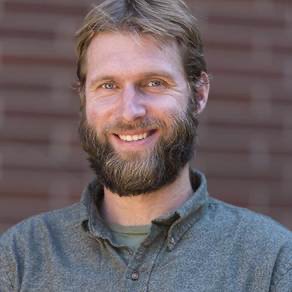
Garrett Meigs, Forest Health Scientist
Forest Resilience Division, Washington State Department of Natural Resources
Garrett Meigs is a Forest Health Scientist in the Forest Resilience Division at the Washington State Department of Natural Resources. He focuses on landscape patterns of wildfires and other disturbances, supporting adaptive management strategies across all lands. Garrett’s current research topics include mature and old-growth forest sustainability, wildfire effects on landscape resilience, and disturbance interactions. He enjoys exploring the dynamic forest landscapes throughout the Pacific Northwest and beyond. He also grew up in a zoo.
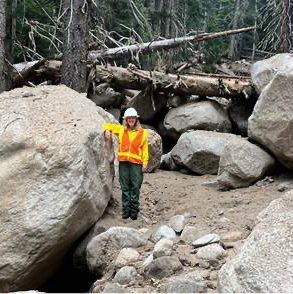
Nancy Calhoun, Post-Wildfire Debris Flow Program Manager
Washington Geological Survey (WGS), Washington State Department of Natural Resources
Nancy Calhoun is the Post-Wildfire Debris Flow program manager at the Washington Geological Survey (WGS), a Division of the WA Department of Natural Resources (DNR). The Post-Wildfire Debris Flow program responds after wildfires to assess the hazards to human safety and infrastructure from wildfire-related geohazards. The program also maps landforms known as alluvial fans to understand better where potential debris flow or flood activity could occur before a fire. Before joining WGS, Nancy worked for 8 years at the Oregon Department of Geology, focusing on landslide hazards and risk across Oregon. She holds a Master of Science from Simon Fraser University and a Bachelor’s from Colorado College, both in geology. Nancy loves working in the outdoors in the beautiful state of Washington!
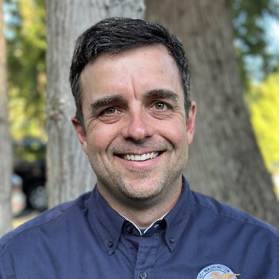
Collin Haffey, Post-Fire Recovery Program Manager
Forest Resilience Division, Washington Department of Natural Resources
Collin Haffey is a wildfire resilience and post-fire recovery specialist with experience in cross-boundary collaboration and strategic program development. For the past two years, he has led the creation and expansion of Washington State’s post-fire recovery program at the Department of Natural Resources, working closely with local governments, Tribes, and landowners. Under his leadership, the program has rapidly scaled, delivering tangible recovery outcomes across the state and earning recognition for aligning diverse recovery efforts under a unified, outcomes-driven strategy.
